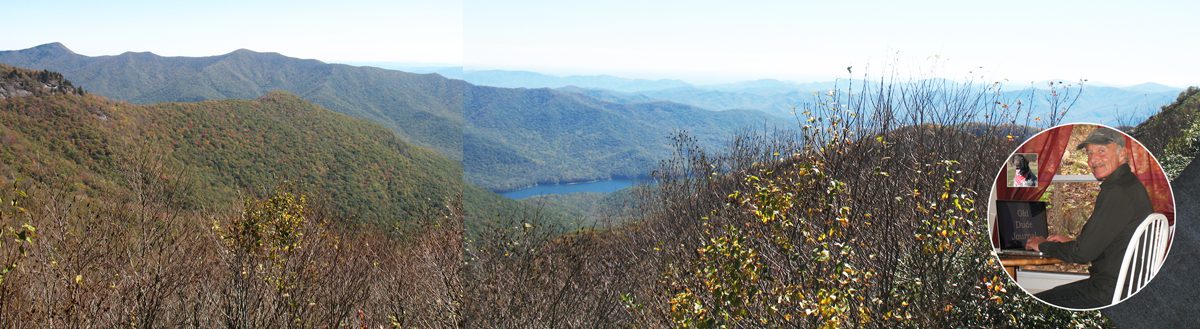
So, what is the Old Dude Journal®?
The Old Dude Journal® will be an ongoing series of blogs— stories about changing times, and people I have met along the way — one person’s perspective of history, as it happened, and continues to unfold. I am hoping that people who have also lived through many of the eventful times of the past 60 years will relate to many of the stories I will be writing, and that younger generations may enjoy learning that as different as things seem to have been in the past, many are really the same today — only different.
The Old Dude Journal® will fall into the category of “Memoirs”, a label that I, personally, am not comfortable with. “Memoirs” implies autobiography — I don’t believe anything I have achieved in my 68 years is worthy of an autobiography.
I love to hike, I love nature, but have never climbed Mt. Everest or been a renowned naturalist. I love music, have played drums and keyboard out often in my lifetime, but have never been a rock star. I love dogs, am a pretty fair dog trainer, but have never had a famous TV show or national tour. I loved playing sports when I was younger, but never became a famous athlete. In college, I majored in History, with minors in English and Psychology, but because of my love of music, began my professional life as a radio DJ— and obviously never became a nationally known personality. I started, and operated a fairly successful Advertising Agency for 38 years, but my agency never became, nor did I want it to become, a famous, nationally known enterprise. So, I see nothing autobiography worthy here.
I intend to avoid being “political” as much as humanly possible, both with this blog, and other projects I have planned, leaving political rants to those far more adept than I, and to my often reactionary, personal social media posts.
Most of all, I would like The Old Dude Journal® to be entertaining.

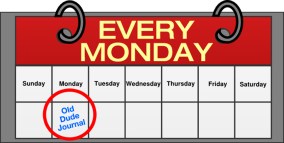
The Old Dude Journal® Blog will post every Monday with a story from one of three categories shown above. One week might be a story from The Middle Years, the next from The Early Years, and so on. Ages and years shown on each sign do not correspond to any normal demographic breakouts, they simply relate to beginnings and endings to certain chapters in my life.
My birthday is in late October. When I was a kid, school systems would normally hold a 5-year old, with such a late birthday, back in Kindergarten for one additional year before allowing progression to the first grade. My father went to the Libertyville, IL school system and fought to have me start first grade when I was still five. As a result, most of my friends were many months older than I throughout my entire school lifetime — huge when you consider things like driving, playing sports, and “dating”. This is important to my stories, especially during my teens, where, as a 14 and 15 year old, I had an entire world open to me at a younger age than most — my friends could drive, and were into things most other 14 and 15 year olds wouldn’t experience until they were one or two years older.
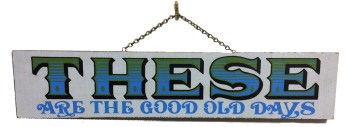
This sign has never lied…
I bought this sign in 1980 at a small gift shop just over the Bourne Bridge entryway to Cape Cod. It was fresh and new then, not yet cliche, and has hung in my offices for almost 40 years. Funny, it always has been, and continues to be right.
I believe that understanding the past is critical to personal growth—it’s a roadmap that clearly details how we got to where we are today, both individually, and as a society. Remembering fond —and not-so-fond — events of the past, and the lessons both taught us, can be exhilarating, disturbing, or a combination of both. In all cases these memories create valuable learning experiences.
But, there is a huge difference between remembering the past for all it can teach us, and living stuck in the past. We have all known people who literally became relics — frozen in time forever — always telling the same old stories, watching the same movies, listening to the same music, and never, in any way, adjusting their thinking to, or welcoming changing times. I have known some people whose death march began in their 20’s or 30’s — personal growth stopped, and the slow march to intellectual, mental and physical death began.
Awwwk-ward…
I have always been “socially awkward”. Conversing with close friends, family, or business associates has always been easy, and fun for me. When I meet new people, the “Hi, how are you?”, “Hi, nice to meet you.” pleasantries are effortless. However, unless the other party and I share a common interest, I simply run out of words — my small talk ability runs it’s course in about five minutes. At this point, I assume the role of observer— asking questions to initiate responses— listening to, and learning who he, or she, really is.
When thrust into any new group of people I do the same thing — only in these circumstances I tend to observe the group as a whole. In my experience, any group of people tends to take on one personality — individuality is put on hold.
“Well, I try my best
to be just like I am
But everybody wants you
to be just like them”
Bob Dylan- Maggie’s Farm
Many different types of people influenced me
I have encountered many good, some not-so-good, and some just plain bad, evil people over the course of 68 years. Social awkwardness has served me well by helping me understand people who came from many different walks of life, upbringings, occupations, and backgrounds. I also learned, very early in life, that some people who were held in the highest regard by society were, in fact, just plain bad people — and that many society looked down on were some of the most ethical, hard-working, trustworthy individuals on the planet. Everyone can teach you something. Often it is just as valuable to learn what not to do, or be, as it is to learn positive traits from exemplary role models.
Social awkwardness also helped in business
I was forced to leave the radio business in 1978. At the time I was Sales Manager at a radio station that was part of a chain of 13 stations surrounding Boston, throughout Massachusetts and New Hampshire. I was about to be promoted to General Manager of one of the other stations in the group. Additionally, headhunters from all over the country were bothering me constantly with openings at network radio and TV stations. I had to make a life decision. Did I really want to do the high level executive thing within the corporate world?
I had grown up in that world. When I was a child my father was a salesperson at WEEI in Boston, at the time part of the CBS conglomerate. By the time I was a teenager, he was President of the NBC Radio Network, working out of WMAQ in Chicago. During his many years in sales, first as a salesperson, then sales manager with WEEI, I vividly remember him flying out on Sunday nights for agency presentations the upcoming week in Atlanta, New York, LA or Chicago, and returning late on Fridays. It’s a life I personally didn’t want — I wanted to be there for my family, and, instinctively, didn’t think corporate America was the right move. So, at the age of 28 I quit the corporate world, left behind a good income, which was about to become spectacular, and began my Advertising Agency with a yellow lined pad, a few pens and pencils, a kitchen table, and not a whole lot of money.
Social awkwardness, and the ability to instantly read, and understand people, was critical to my first step — finding a client or two. The character of a business owner is the most critical quality in determining the success any business will have. While working in radio I had handled two clients who were hard working, promoted their businesses honestly, operated ethically, and were good to their employees as well as their customers. One was a used car dealer, who I ended up being with for 20 years. At one point, he became the largest Subaru-Mazda in New England. The other, who I was with for 36 years, owned a single auto parts store, which grew into a 23 store chain by the time he retired in 2008.
I never added a client I felt I couldn’t trust, or honestly promote. Unlike competitors, I never signed a contract with any client. One reason was trust — I felt that if I couldn’t trust a client to pay me, then I shouldn’t be with them in the first place. This was of great importance after the first couple of years I was in business. During any given time my agency would have hundreds of thousands of dollars a month placed in Boston newspaper, TV and/or Radio advertising and mailers. My agency owed this money because we placed the advertising. One major client deciding not to pay us could have pretty much ended my agency’s existence at any given time. From the client’s standpoint, they had to trust us to pay the media bills when they paid us. Since my clients always paid by the 20th of the month, we always paid media by the end of any given month, unlike many agencies in Boston and Worcester who kited their clients’ money out 60 or 90 days. What these agencies never realized is what great media deals you can make when you have a reputation for paying bills on time. In 38 years of business we only wrote off $438 very early on, from the old Mt. Watatic Ski Area in central Mass., a client who had called, and I had taken on against my better judgement. So, never signing contracts worked out fine — character is much more powerful than anything written on a piece of paper.
The other reason I never signed contracts was strategic — contracts have start and end dates. When the end of a one-year contract approaches, the natural tendency for a client would be to shop the agency marketplace. Since there were no contracts with any clients, years slipped by effortlessly. The least amount of time I was with any client was 19 years.
Succeeding in the world of advertising and marketing requires having a pulse on the needs, opinions, and buying habits of many different public demographic segments. Their needs and buying habits change continually and rapidly. Understanding this, and the marketplace, is critical to creating campaigns that effectively, and efficiently, bring customers to clients. “Trend research” is all too often published too late—by the time a research company completes surveying, and publishes results, the market’s attitudes, needs, and buying habits have often already moved in a new direction. So knowing intuitively where any given market was at any given time was a great tool.
Additionally, my natural tendency to observe and listen enabled me, with clients, to naturally ask the right questions—then, just shut up and listen. They were on the front lines. They knew their customers, and problems facing their businesses at any given time. How could I have helped them if I didn’t also know this information?
I think the fact that I rarely took notes was disconcerting at times to some of my clients. My note pad was usually a collage of weird doodles, with some facts and figures mixed in. But, I very rarely forgot anything. I would picture and remember conversations vividly and, more importantly, how clients said what they said. I consider the latter to be most important because people don’t always say what they mean. If a client didn’t particularly care for a program I presented, but OK’d it anyway, I would know— if not at the time, then after, when I went over the conversation and reactions in my head. When this happened, I’d go back and fix the program in a way that I believed would still achieve the same success, and, at the same time, be something with which the client was more comfortable. You can’t get that kind of information from a bunch of notes on a pad.
Diverse Influences
Most individuals become, and usually remain, the sum total of influences within households in which they were raised. To name just a few examples: A bigot usually comes from a bigoted household, a sexist from a sexist household, a liberal from a liberal household, a conservative from a conservative household, a Born Again from a conservative, religious household. Some people do change the ways their upbringing molded them— I have found these people to be the exception, not the rule.
My father graduated from Columbia University, which he attended on the GI Bill at the conclusion of WWII. My mother graduated from Barnard. Both were brilliant—I remember two New York Times newspapers in the house on Sundays so they could compete, the winner being the first to complete the Time’s crossword puzzle. I must have been such a disappointment to them — I couldn’t even finish the old TV Guide crossword puzzle.
My mother was highly intellectual, but lacked “street smarts” of any kind. My father had “street smarts”, but believed common sense and hard work were the keys to success in life. He had very little use, or patience, for intellectual discussions.
My mother was a hard-line Democrat. My father was a hard-line Republican—in his defense, Eisenhower was President, Republicans weren’t quite the same then. The first election I remember was Eisenhower v Stevenson. I was five, living in Libertyville, IL. My father would walk around the house singing, to the tune of Whistle While You Work from Sleeping Beauty, “Whistle while you work…Stevenson’s a jerk…” just to get my mother going, and, believe me, the strategy always worked. My parents were such hard-line Democrats and Republicans, I had no choice but to become an Independent.
Growing up, I was also very fortunate to spend much time with my grandparents. On my mother’s side, my Grandfather had been lawyer and Federal Judge, my Grandmother a broadway, film, and early days of TV actress, plus an author and animal rights activist. During my lifetime they lived winters in Manhattan, summers in a rented cabin in the Byrdcliffe Colony in Woodstock, NY, and finally in the permanent home they built in Byrdcliffe when both retired.
With these grandparents I went to opening night of The Sound of Music — which made me love Broadway and stage productions forever — and to the after party at the home of either Howard Lindsay or Russel Crouse. I can’t remember which. I only remember people everywhere celebrating, an elevator between floors in the home, which amazed me, and the Doorman getting us a cab back to Morningside Drive in the rain — all things that would be important to a seven year old. From a very young age, I experienced musicians, writers, stage actors and artists of all types, at all levels of success, from starving to arrived, in their home in Woodstock. Cocktail hour would arrive at 4:30— people would show up to discuss world events, politics, philosophy, the arts, and to just enjoy each others’ company until precisely 6:00pm, when all headed their separate ways.
It was also with this Grandfather that I learned to appreciate, love, and respect nature. He often took me hiking and camping throughout the Catskills.
My grandparents on my father’s side lived winters in Uncasville, CT., summers at York Beach Maine. My Grandfather was an ultra conservative, hard-line Christian—not a Born Again, let’s just say he was a “Born”. He was high up in the YMCA organization in Boston. I never got close to this Grandfather. He was a cold, non-sharing, seemingly non-caring person whose contribution to our lives, as grandchildren, was to make us watch The Billy Graham crusade on Saturday nights, right after The Lawrence Welk Show. I can still picture the room, the black and white TV— I can still feel the misery.
My Grandmother, on the other hand, was a total people person, genuine in her love for practically everyone she met. I was very close to my Grandmother. She taught me piano, card and board games, badminton, tennis, and my love for the ocean.
Common theme from very different people
I was very lucky to be surrounded by so many strong people throughout my early life. Each was so different that I had to become an independent thinker. But, in spite of their philosophical differences, both parents and sets of grandparents taught one theme through example: There are only two types of people; good, honest, ethical people — and not-so-good, dishonest, immoral people. There were no racial, gender, or religious biases, taught or implied, by the people who brought me up and influenced me the most. In fact, I experienced exactly the opposite through the lives they led. I never encountered any biases until I hit third grade. When I did, it confused the hell out of me and became the subject of many discussions at home.
The only exception may have been that Christian grandfather, my father’s father. Although he had no issues with race, he treated my grandmother as though she were more his slave than his companion. And, I vividly remember, when JFK was running for President, he started making some noise about what would happen if a Catholic became President. My father loved his mother dearly, and would take his father to task whenever he appeared to be treating her with anything less than the utmost respect. I can still picture, after dinner at their home in Maine, my father telling my grandmother to sit, while he cleared the table and did the dishes, all the while commenting that my grandfather could get off his butt and help him at any time. And, I clearly remember my father shutting my grandfather down completely on the JFK/Catholic thing, telling him he never wanted to hear that kind of talk around us children — that from a hard-line Republican who was all about Richard Nixon.
So, that’s who’s writing this Blog
Creating the “About” page was an extremely difficult challenge for me. Unlike the Blog, which will be more story-history-how does it relate to now? oriented, in this section I had to actually write about myself because I believe people should know a little something about who it is that is writing these pieces.
My father drilled into me that, “The listener is control of the conversation.” My observer role was further reenforced by outside major influences in my life —The Fool on the Hill, John Lennon, and practically everything Bob Dylan ever wrote. I also come from a time when people actually asked, “who are you?”, not “what do you do?”
I lived through, and fully experienced the 60’s — the closest thing this country has seen to an artistic and cultural Renaissance. I have always taken issue with those people who proudly proclaim, “If you remember the sixties, then you weren’t there.” Apparently, they are the people who weren’t there.
Blog posts will be written through the eyes of a person whose only possible racial prejudice is toward white supremacists, whose only possible religious bias is toward the conservative Christian right. Neither will be carried forward into blog posts. I believe, in my soul, that all individuals are to be respected, or disrespected, based solely on who they are as individuals — not by gender, race, religion, sexual preferences, or group to which they belong.
I am a fiercely independent person who has avoided identifying with any groups throughout my lifetime, because every group, sooner or later, imposes rules, spoken or unspoken, on how one must think and/or act in order to remain part of that group. Even groups of non-conformists have rules about how one must act in order to properly not conform.
That being said, I do love people. I am in love with life and look forward to every day being a new beginning. I love learning about, and doing new things. We are only on this planet for a very short time, and I have always fully believed in making the most I can out of every possible minute.
So, here I am. Back at the kitchen table with my yellow lined pad, 2017 version, starting new endeavors that have been on my mind since the original title was going to be “61”, the age I was when I first decided to do this. But, hey, it also took a few years of thought before I started that advertising agency. Things happen when they are supposed to, and when you’re ready for them. Let’s hope this is that time.
 Old Dude Journal®